Dr. Aster Shweaamare
ART Coordinator, Zewditu Memorial Hospital, Addis Ababa, Ethiopia
For more than two decades, Dr. Aster Shweaamare has been one of the driving forces behind Ethiopia’s fight against HIV.
At the Zewditu Memorial Hospital in Addis Ababa, one of Ethiopia’s largest HIV treatment centers, she leads the disease prevention team and helps oversee care for more than 7,000 patients. Up to 200 people visit the clinic each day for testing, treatment and support.
Dr. Shweaamare has witnessed the HIV epidemic in Ethiopia at its most devastating – and the remarkable progress that has followed.
In 2003, Zewditu Memorial Hospital became the first health facility in Ethiopia to introduce antiretroviral medicines (ARVs) and Dr. Shweaamare was among the first doctors to prescribe the lifesaving medicines. At the time, treatment was not free. Many patients arrived gravely ill, often carried in on stretchers with opportunistic infections.
“Patients were dying,” she says. “Some tried to sell their homes to pay for medicine.”
Today, the situation has changed dramatically: With expanded access to antiretroviral therapy and strong national programs, people living with HIV can start treatment early and live long, healthy lives.
Few changes illustrate that progress more clearly than the prevention of mother-to-child transmission.
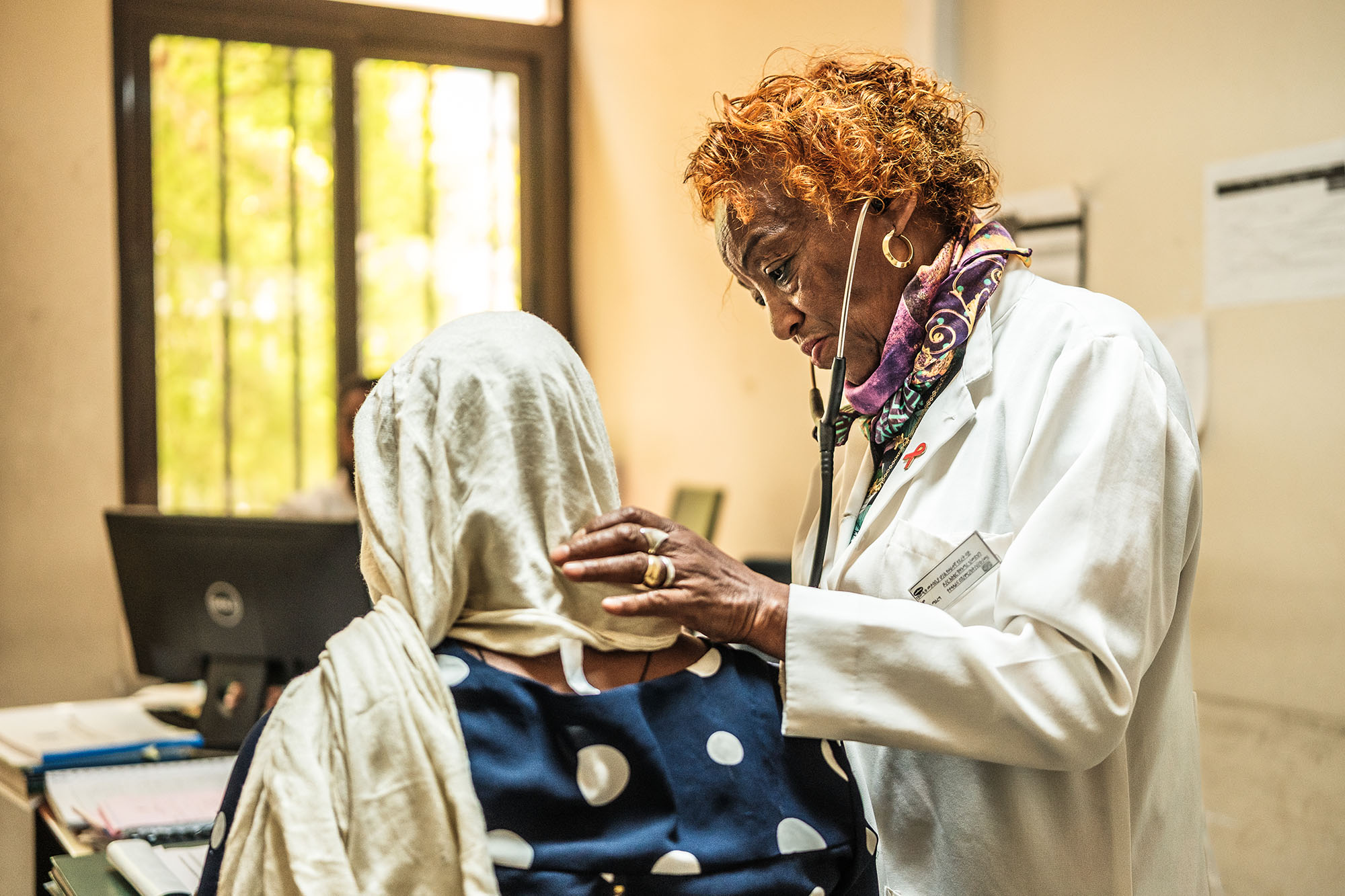
Photo: The Global Fund/Brian Otieno
At Zewditu Hospital, all pregnant women are routinely tested for HIV. Those who test positive begin treatment immediately, with both mother and baby closely monitored. In Ethiopia, the share of pregnant women with HIV receiving antiretroviral therapy to protect their babies rose from very low levels in the early 2000s to 96% by 2020, and today, across Ethiopia, most babies born to mothers with HIV are HIV-free.
“Because of treatments, people are living long, quality, healthy lives now,” Dr. Shweaamare says.
Over the years, she has watched children once critically ill with HIV grow up healthy. One patient she treated as a 7-year-old with TB and advanced HIV is now studying to become a doctor himself.
Despite this progress, Dr. Shweaamare says the fight is not over. Stigma and late diagnosis still mean some patients arrive at the hospital dangerously ill.
For more than 20 years, the Global Fund has invested in Ethiopia’s HIV response, expanding testing and treatment, preventing mother‑to‑child transmission, and supporting community programs that reach the people most affected.