Wahyu Agung Pratama
Biomolecular and Genomic Laboratory Technician, Sulianti Saroso Infectious Disease Hospital, Jakarta, Indonesia
At Sulianti Saroso Infectious Disease Hospital in Jakarta, laboratory teams routinely process samples from patients who could be ill with an infectious disease. Working safely with these biological samples requires specialized equipment and strict procedures designed to prevent accidental exposure in the laboratory.
Wahyu is part of the team responsible for this work. As a laboratory technician in the hospital’s molecular laboratory, he helps detect diseases such as tuberculosis and other emerging infections. This work depends on biosafety cabinets – enclosed workspaces that control airflow and filtration so that potentially dangerous pathogens remain contained during testing.
In April 2025, Wahyu attended a regional training on laboratory biosafety and biosafety cabinet maintenance delivered through the Asia Pacific Regional Initiative on Laboratories (APRIL), which is supported by the Global Fund. The course focused on the correct use of protective equipment, laboratory workflow, and the airflow systems inside biosafety cabinets that prevent pathogens from escaping into the surrounding environment.
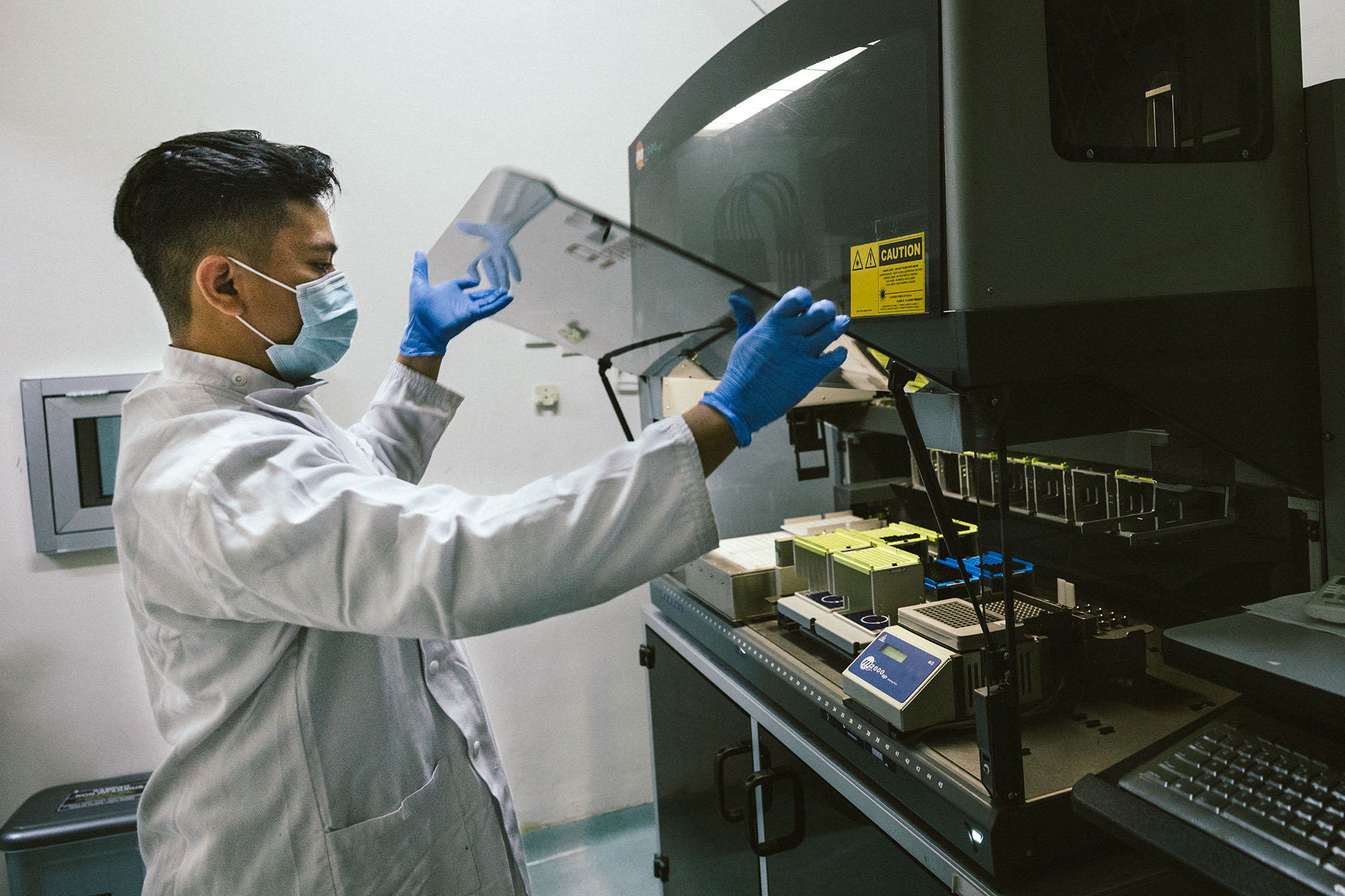
Photo: The Global Fund/Vincent Becker
“In the laboratory, I had never examined the biosafety cabinet like that before –looking at the airflow, how the system works...how it protects us,” he says.
Since completing the training, Wahyu has been applying these practices in the laboratory and sharing what he learned with colleagues and university students who regularly complete internships at the hospital.
“Almost every month we get new students, about 10-15 every 6 months,” he says.
Laboratories like those at Sulianti Saroso Hospital play an important role in Indonesia’s infectious disease response. Protecting people on the frontlines of disease response and surveillance is the cornerstone of strong biosafety capacity: Technicians in the laboratory can handle infectious samples safely, and countries can detect dangerous health threats quickly.